Ferrite magnets excel in unmatched cost-efficiency, robust resistance to heat, corrosion, and oxidation, as well as excellent electrical insulation properties. However, their long-term stability is constrained by relatively weak mechanical characteristics. Due to their brittle nature, ferrite magnets cannot withstand impacts or flexing, rendering them unsuitable as structural components. Ferrite magnets are ideal for environments that prioritize magnetic strength and durability, ensuring consistent performance.
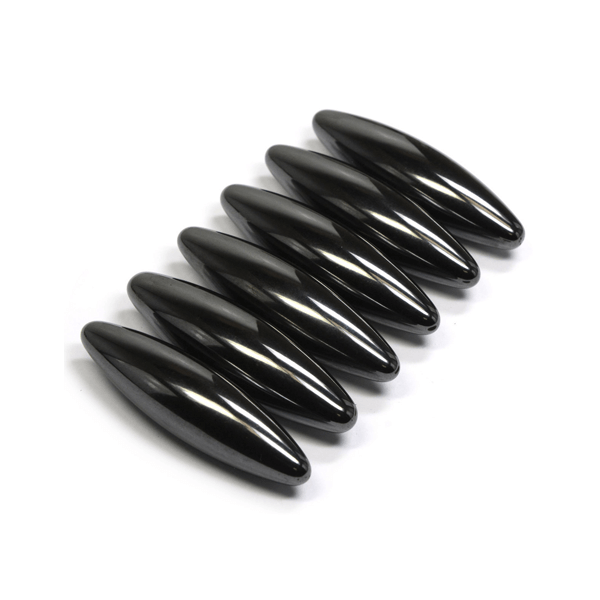
Ferrite magnets are made from Iron Oxide and, as a result, do not corrode when immersed in water or exposed to moisture. They are even resistant to many organic solvents, alkaline solutions, dilute acids, and some hydroxides. Due to their unrivaled corrosion resistance, ferrite magnets are very rarely coated. Of course, for certain specialized applications, such as medical instruments, ferrite magnets may require surface treatments to prevent dust spreading. In practice, Nickel plating is also feasible for ferrite magnets. Ferrite magnets may additionally be painted to disguise their naturally dark gray appearance. Furthermore, ferrite magnets used in magnetic bracelets, magnetic necklaces, or other magnetic therapy products often undergo mirror polishing to achieve an appearance similar to metallic luster.
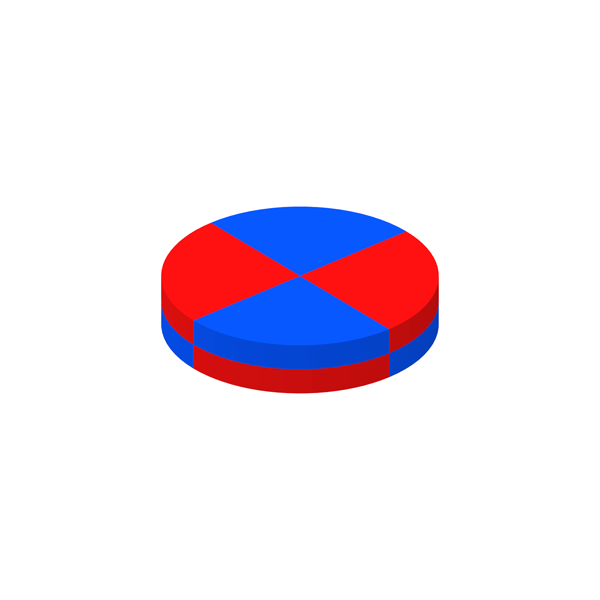
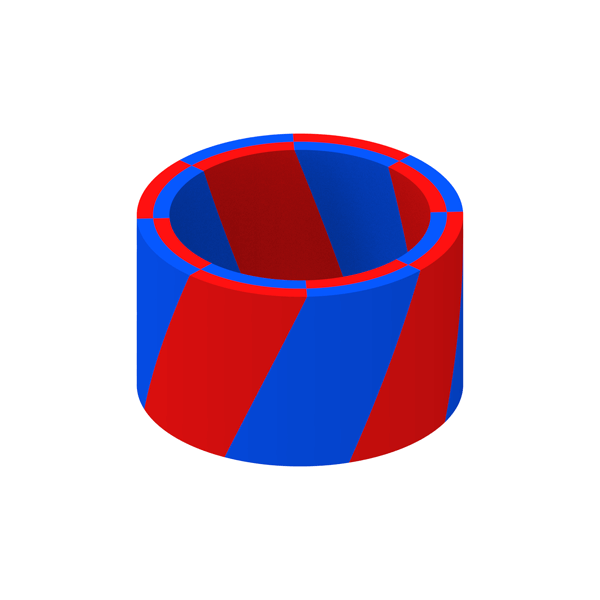
Most permanent magnets must be magnetized prior to serving in their final applications. The magnetization process involves applying an external magnetic field along a specified direction to the permanent magnets to achieve saturation. Ferrite magnets are easier to magnetize and demagnetize compared to Neodymium magnets or Samarium Cobalt magnets. Ferrite magnets can be classified as isotropic or anisotropic based on whether they have a preferred magnetization direction. The magnetization direction in isotropic magnets is random, allowing them to be magnetized in any direction. Anisotropic magnets can only be magnetized in a predetermined direction. For anisotropic ferrite magnets, various pole configurations can also be realized, as long as they do not conflict with the predetermined orientation direction.